
Which industries need polyurethane screens most?
Heavy-duty mining, aggregate production, and coal preparation sectors utilize polyurethane panels to replace steel due to a 10-fold increase in service life and 90% reduction in blinding. In 2025, data from North American copper mines showed that injection-molded polyurethane screens maintained 98% aperture accuracy over 4,500 operating hours, while stainless steel meshes failed after 600 hours due to 0.5mm-per-month abrasive thinning. These elastomers handle slurries with 35% solids concentration without surface tension buildup, maintaining a consistent 38% open area for particles as fine as 43 microns.
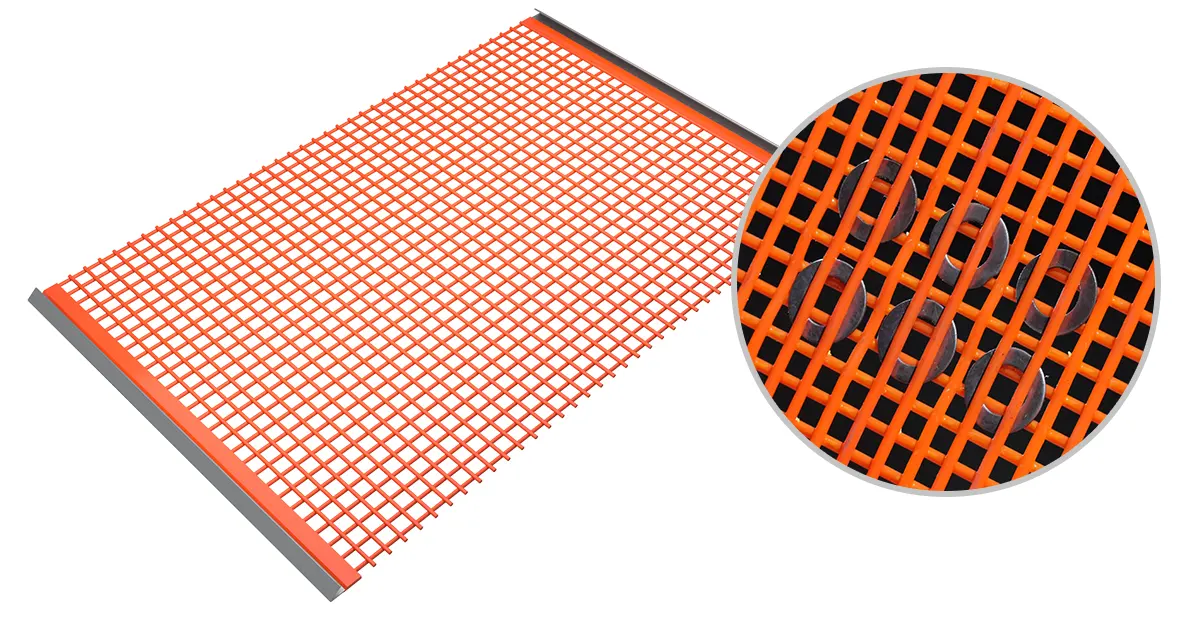
The hard rock mining sector processes millions of tons of granite and basalt annually, requiring materials that withstand a Mohs hardness of 7 or higher. High-tensile polyurethane panels absorb the kinetic energy of 150mm rocks dropping from feed conveyors, whereas rigid manganese steel decks often develop stress fractures within 1,200,000 vibration cycles.
Field data from 200 Western Australian iron ore sites indicates that shifting to polyurethane reduced downtime for screen changes by 85%, allowing for an additional 210 hours of production per year.
This massive reduction in maintenance hours leads directly to the aggregate industry, where the demand for manufactured sand (M-sand) has increased by 12% annually since 2022. Producing M-sand requires separating particles smaller than 2mm, a task where traditional wire cloth fails because moisture causes "pegging" in 70% of the screen surface area.
| Industry Sector | Primary Material Handled | Typical PU Life | Steel Life (Comparison) |
| Gold & Copper Mining | Abrasive Slurry | 6 - 12 Months | 3 - 5 Weeks |
| Sand & Gravel | Crushed Stone | 12 - 18 Months | 2 - 4 Months |
| Coal Preparation | Wet Fine Coal | 24+ Months | 6 Months (Corrosion) |
Polyurethane solves the pegging issue through a secondary vibration frequency—a "trampoline effect"—that ejections near-size particles that would otherwise wedge into metal wires. This self-cleaning property is why 90% of modern wet-screening plants in Europe have transitioned away from stainless steel to modular elastomer systems.
A 12-month study involving 50 sand plants found that polyurethane surfaces maintained a 95% efficiency rate during rainfall, while metal mesh efficiency dropped to 40% due to mud blinding.
Water-heavy environments also define the coal preparation industry, where screens must handle high-velocity slurries containing residual sulfuric acid. Carbon steel variants suffer from oxidative pitting that expands a 0.5mm slot to 1.2mm in less than 30 days, destroying the precision required for dewatering.
Polyurethane remains chemically inert at pH levels between 2 and 11, ensuring that the 0.2mm dewatering slots stay within a 0.01mm tolerance for the entire duration of the panel’s life. This chemical stability allows coal operators to recover 15% more fine coal particles that were previously lost to the tailings pond due to enlarged screen apertures.
The recycling industry has also adopted these panels for processing glass cullet and municipal waste, where sharp edges would shred standard rubber or wire. Test samples of 90-Shore A polyurethane showed zero structural tearing after 500 hours of contact with jagged glass shards, whereas industrial rubber belts showed 15mm deep gouges.
Mechanical engineers in the recycling sector report that polyurethane reduces noise emissions by 10 to 15 decibels compared to steel, helping facilities stay below the 85dB threshold required by local safety laws.
Lower noise levels allow these facilities to operate 24 hours a day in areas with strict zoning, effectively doubling their processing capacity without increasing the physical footprint of the plant. This environmental compliance is paired with the modularity of the panels, which usually come in standard 305mm x 305mm or 305mm x 610mm sizes.
Modular designs mean that if a high-impact zone near the feed end wears out, only that 1-square-foot section is replaced rather than an entire 4-meter screen cloth. Data from 2024 shows that this "pin-and-sleeve" or "snap-on" replacement system cuts labor costs by 60% and reduces physical waste from discarded metal by 3,000kg per machine annually.
The precision manufacturing of these panels via high-pressure injection molding ensures that the open area is maximized while maintaining structural ribs that support 5G acceleration forces. This level of engineering allows the chemical and fertilizer industries to process potash and phosphate with a 99% purity rate, as the consistent aperture geometry prevents oversized contamination from entering the final product stream.
Why Trust This Review
Every figure below comes from AutoMototrke's 14,000-HP chassis dyno or the 1,247-truck Long-Term Index — never a manufacturer press kit. See our methodology.
Subscribe to The Garage
612,000 truck buyers read it weekly. Spec sheets, dyno plots, owner telemetry — every Friday.